

SUMMER SLUMP STARTS IN THE RUMEN
Heat stress is commonly associated with reduced milk production, lower reproductive performance and changes in cow behavior, but many of its negative effects originate at the rumen level. As environmental temperature and humidity increase, cows undergo a series of physiological and behavioral adaptations aimed at dissipating heat, altering rumen fermentation dynamics, nutrient utilization, and milk component production. In many cases the “summer slump” begins in the rumen before performance declines become apparent.
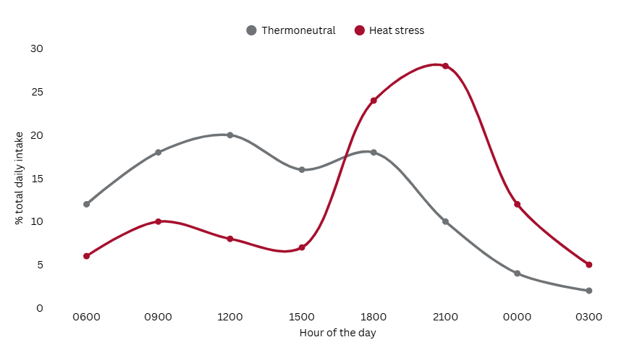
One of the earliest responses to heat stress is a reduction in dry matter intake (DMI). Cows decrease feed consumption to minimize metabolic heat production associated with digestion and fermentation (West, 2003), but the reduction in intake isn’t evenly distributed throughout the day. Heat-stressed cows typically consume fewer, larger meals and shift feeding activity toward cooler evening hours. This altered feeding behavior increases fluctuations in rumen substrate availability and contributes to instability in ruminal pH (Figure 1).

At the same time, heat stress affects cow behavior in ways that further challenge rumen function. Increased standing time and reduced lying behavior are common as cows attempt to maximize heat dissipation (Figure 2). Reduced lying time is often associated with lower rumination activity, decreasing saliva production and the buffering capacity of the rumen. Because saliva is a major source of bicarbonate entering the rumen, reductions in rumination can increase the risk of subacute ruminal acidosis (SARA), particularly in high-producing cows consuming energy-dense diets (Plaizier et al., 2008). Milk fat depression is a common nutritional consequence of heat stress and is often linked to disruptions in rumen fermentation. Reduced effective fiber intake, lower ruminal pH, and altered biohydrogenation pathways can increase the production of specific fatty acid intermediates associated with inhibition of mammary milk fat synthesis (Bauman and Griinari, 2003).
Changes in feeding patterns during heat stress also increase the likelihood of feed sorting. Cows tend to consume smaller, more fermentable particles while avoiding longer forage fractions, increasing dietary starch concentration relative to effective fiber intake. This behavior accelerates ruminal fermentation, increases volatile fatty acid accumulation, and further depresses ruminal pH. As rumen conditions become less stable, fiber digestibility declines and microbial efficiency may be compromised. Consistent feed availability and frequent feed push-ups are essential to encourage more uniform intake patterns throughout the day. Delivering a greater proportion of feed during cooler evening hours can help align feeding behavior with environmental conditions. Attention should also be given to TMR consistency and moisture, as dry rations are more prone to sorting.
Heat stress also alters nutrient partitioning and gastrointestinal physiology. Blood flow is redirected toward peripheral tissues to facilitate heat dissipation, reducing circulation to the gastrointestinal tract and impairing nutrient absorption and rumen motility (Baumgard and Rhoads, 2013). In addition, elevated respiration rates increase maintenance energy requirements while reducing carbon dioxide concentration in blood, contributing to altered acid-base balance (Baumgard and Rhoads, 2007).
Diet formulation during heat stress requires careful balancing of energy density and physically effective fiber. Increasing dietary energy concentration is often necessary to compensate for lower intake, but excessive reliance on rapidly fermentable starch can exacerbate ruminal acid load. Maintaining adequate physically effective neutral detergent fiber (peNDF) is critical to support rumination and buffering capacity. Likewise, highly digestible fiber sources may help maintain energy supply while minimizing heat production associated with fermentation. Water availability also becomes increasingly important during periods of heat stress, and its intake may increase by 30 to 50% in lactating cows, and inadequate access can rapidly compound reductions in intake and milk production (Murphy, 1992).
From a nutritional perspective, heat stress represents more than a simple reduction in feed intake. It is a complex metabolic and behavioral challenge that disrupts rumen fermentation, alters nutrient partitioning, and reduces efficiency of nutrient utilization. Understanding how heat stress affects rumen function is essential for developing feeding strategies that maintain both cow health and milk component production during summer months. Reduced intake, altered feeding behavior, decreased rumination, and increased sorting collectively increase the risk of ruminal acidosis and milk fat depression. Effective summer feeding programs should therefore focus not only on maintaining intake, but also on preserving rumen function and fermentation stability under challenging environmental conditions.
— Isabela Carrari
