

FROM THE FARM REPORT: STUDYING THE RUMEN IN THE LAB: RUSITEC AT MINER
The Rumen Simulation Technique, known as RUSITEC, is a continuous in vitro system designed to simulate the rumen fermentation processes that occur in ruminants. The system uses fermentation vessels maintained at rumen-like conditions (temperature, anaerobic environment, and continuous buffer infusion). This setup allows researchers to study ruminal fermentation under highly controlled and repeatable conditions.
The RUSITEC system was developed in the late 1970s by Czerkawski and Breckenridge. Its original purpose was to create a reliable laboratory model of the rumen that could overcome limitations of short-term batch cultures and reduce reliance on animal trials. By enabling long-term, steady-state fermentation, RUSITEC enabled the study of rumen microbial activity, nutrient degradation, and fermentation end products over extended periods.
The system works like a set of small, controlled “rumens,” as shown in Figure 1 below.

Rumen fluid collected from cows is added to fermentation vessels kept warm and free of oxygen, mimicking the rumen environment. Feed samples are placed in small, porous bags and suspended in each vessel. These bags are changed regularly to mimic daily feeding. A buffer solution is continuously supplied to simulate saliva flow and maintain stable fermentation conditions, while liquid flows out of the system to represent digesta leaving the rumen. As fermentation proceeds, gases such as methane are collected, liquid samples are analyzed for fermentation end products, and digesta is analyzed to monitor digestibility. Because all vessels operate under the same conditions, different diets or strategies can be compared accurately.
RUSITEC systems are used in ruminant nutrition research to evaluate feed ingredients and diet formulations, study protein degradation and ammonia dynamics, measure volatile fatty acid (VFA) production, investigate gas production and mitigation strategies, and examine rumen microbial metabolism and efficiency. The importance of RUSITEC lies in its ability to isolate dietary effects under standardized conditions, improving experimental precision while reducing animal use and costs, and enabling faster data generation, making it a powerful tool for advancing sustainable dairy nutrition.
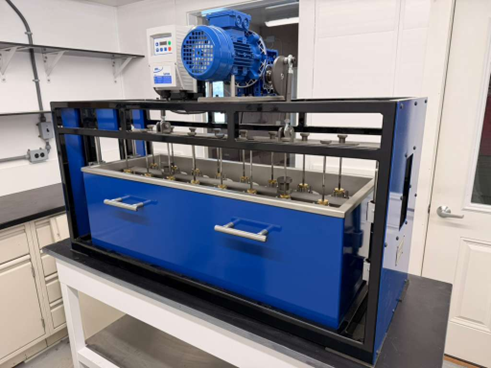
Miner Institute is currently installing a new RUSITEC system that will be ready for use this summer (Figure 2). This system will expand our research capacity in rumen fermentation, allowing detailed evaluation of feeds, additives, and nutritional strategies relevant to modern dairy production. Dr. Marcondes, a research scientist at Miner Institute, has a lot of experience working with RUSITEC and other continuous flow fermentation systems. His lab has previously conducted RUSITEC experiments focused on rumen fermentation and nutrient utilization, the use of alternative feedstuffs for lactating cows, and the use of methane mitigators. Once operational, the RUSITEC will support our ongoing efforts to improve animal efficiency, milk production, and environmental sustainability, strengthening the institute’s role as a leader in applied dairy nutrition research. We are excited to have it up and running!
— Isabela Carrari
