

FROM THE FARM REPORT: HAVE YOU HEARD OF RECONSTITUTED CORN FOR DAIRY COWS?

Corn grain is a major source of starch in dairy cow diets, and the way this grain is processed can directly affect digestibility and animal performance. Traditionally, finely ground dry corn is the most commonly used form on farms. However, other options, such as high-moisture corn and reconstituted corn, have been used as strategies to improve starch availability in the rumen. A recent study in collaboration with Miner Institute’s Dr. Marcos Marcondes assessed whether reconstituted finely ground corn could be a practical and effective alternative to both dry and high-moisture corn using the same flint corn hybrid.
How is reconstituted corn produced?
The reconstituted corn grain (RCG) used in this study began as mature dry corn (approximately 89% dry matter). The grain was first finely ground using a 3 mm sieve. After grinding, water was added to achieve a final moisture content of around 40%. A propionic acid-based additive was then incorporated at a rate of 5 L per ton to inhibit spoilage during ensiling. The material was tightly packed into 500 L plastic silos, sealed with plastic film, and covered with soil to prevent air from entering. Both reconstituted and high-moisture corn were stored for 258 days before feeding. The main advantage of reconstituting corn is flexibility. In many regions, especially those with frequent rainfall during harvest periods, ensiling high-moisture corn can be difficult due to the narrow harvest window at ideal grain moisture levels. Reconstitution allows the use of mature dry grain harvested later, helping producers avoid weather limitations while still taking advantage of fermentation benefits if appropriately stored.
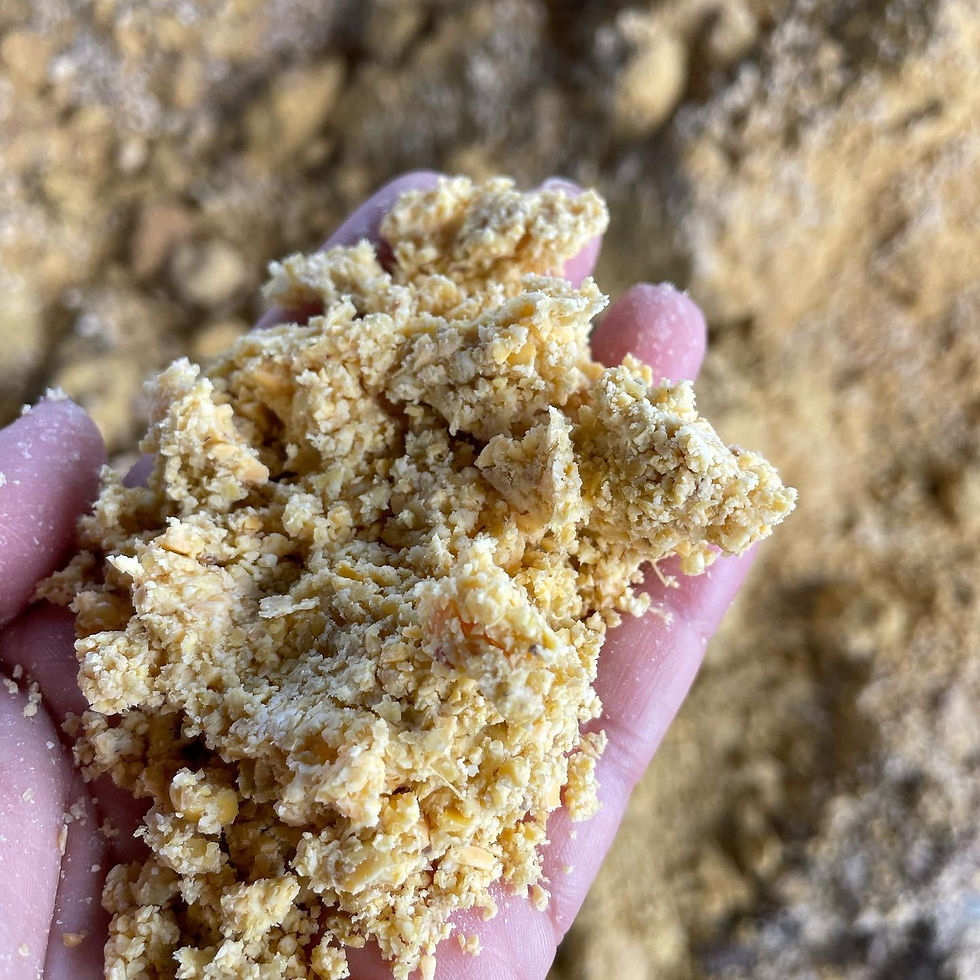
Treatments evaluated
The study compared three diets containing 16% corn grain (dry matter basis): dry ground corn (DGC), reconstituted finely ground corn (RCG), and high-moisture rolled corn (HMC). All diets were formulated to contain similar starch levels (approximately 22%), crude protein (around 17.5%), and a balanced fiber content. Corn silage accounted for just over half of the diet.
What did the results show?
Cows receiving high-moisture corn had the highest dry matter intake, averaging 21.1 kg/day, compared to 19.1 kg/day for dry corn. Reconstituted corn resulted in an intermediate intake (19.8 kg/day) that did not differ significantly from either treatment. Both reconstituted and high-moisture corn improved total-tract crude protein digestibility compared to dry corn (71.7% and 73.1% vs. 68.1%), and milk fat yield was higher when cows received high-moisture corn. Although milk yield tended to be greater with high-moisture corn (31.0 kg/day vs. 28.6 kg/day for dry corn), reconstituted corn showed only an intermediate response (29.3 kg/day), and did not significantly differ from either treatment. Feed efficiency remained unchanged across treatments. Importantly, there were no differences in starch digestibility or ruminal pH among treatments. Rumen pH remained above 5.8 for almost the entire day in all groups, indicating that moderate dietary starch levels and adequate fiber maintained rumen health regardless of the corn processing method.
What does this mean in practical terms?
Even after 258 days of storage, reconstituted corn performed similarly to dry corn across most responses, with only minor improvements in protein digestion and indicators of rumen fermentation, such as acetate and propionate concentrations. High-moisture corn resulted in slightly better overall performance, mainly due to higher intake. The study suggests that the benefits of reconstituted corn may be less pronounced when diets already contain relatively low starch levels and high-quality forage, as was the case in this research. From a management standpoint, reconstituted corn can be considered when harvesting high-moisture corn is logistically challenging. It allows the use of mature dry grain while still allowing fermentation to partially break down the protein matrix surrounding starch granules. The process, however, requires dedicated space, proper sealing, and extended storage (more than 8 months), and may carry a higher risk of dry matter losses if not handled with care.
In summary, reconstituted corn can be a viable alternative to finely ground dry corn, particularly when weather conditions complicate early harvest for high-moisture storage. It offered modest improvements in nutrient utilization, especially crude protein digestibility, although high-moisture corn had slightly better responses in intake and milk fat production. When considering reconstitution on-farm, practical factors such as water availability, adequate mixing capacity, fermentation management, storage duration, and feed stability must be considered.
— Marcos Marcondes
* Bernardo Martins and Polyana Rotta also contributed to this article.
