

FROM THE FARM REPORT: FEELING THE HEAT… RETHINKING TIMING OF INSEMINATIONS DURING THE SUMMER

Anyone who has AI bred cows during the summer months has “felt the heat” when breeding animals. As a relief breeder on our family’s farm, I’ve often wondered if it was even worth the effort and cost of the semen straw to put sperm in what feels like a roaster oven. Since I’ve spent considerable time observing spermatozoa under a microscope, I know how sensitive sperm are to temperature…both cold and hot. The reproductive system of mammalian males is designed for storing sperm below body temperature. So I’ve wondered what short term and long term consequences the elevated body temperature in dairy cattle had on sperm survivability in the female reproductive tract. Surprisingly, I couldn’t find any studies that specifically addressed that question.
Many studies have demonstrated how heat stress adversely impacts reproductive performance of lactating dairy cows in the summer months. A study Miner Institute conducted with support from the Northern New York Agricultural Development Program showed how pregnancy rates were improved by installing fans for lactating cows.

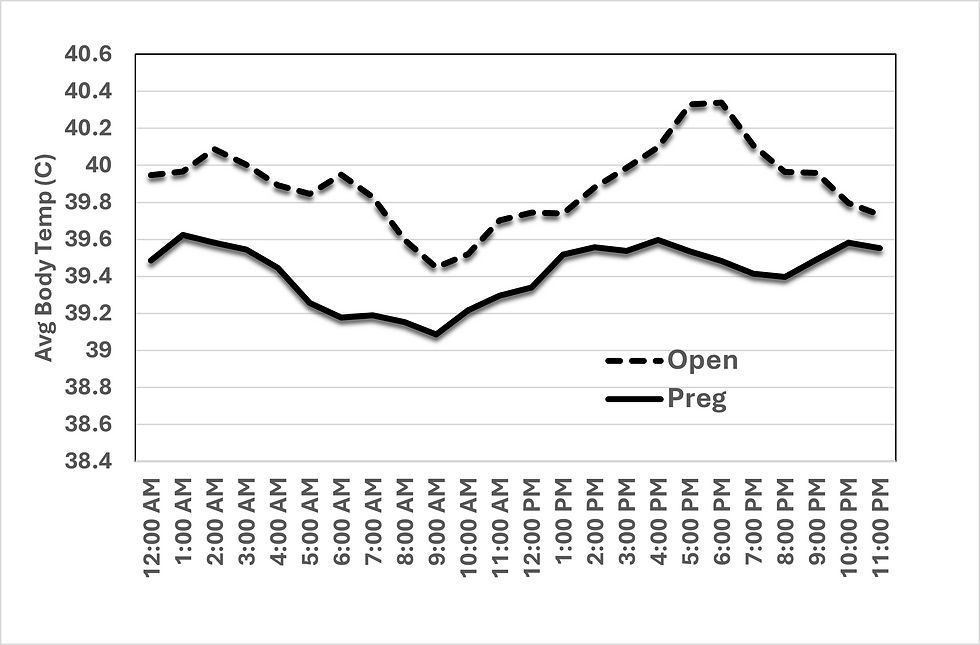
Even with heat abatement systems, the research Miner Institute has conducted over the years utilizing indwelling body temperature sensors has shown there are periods of time during the day when their body temperatures are higher than others. Generally speaking, most cows regardless of the farm had lower body temperatures in the morning than afternoon and evening…even if the outside temperature has begun to cool. We looked at data from one farm that bred many cows using OvSynch program which timed AI for 5-6 pm breeding. The chart below shows the body temperature of cows on the day of breeding and the outcome of the breeding as either Open or Pregnant. The cows that did not conceive had elevated body temperatures throughout the day of breeding compared to the pregnant animals particularly at the time OvSynch breedings occurred. Was it the result of an adverse impact on sperm viability at the time of insemination? Obviously that might be reading too much into the data. However, it does warrant a rethink into timing of inseminations during the summer months. Shifting all inseminations, particularly timed AI protocols to target morning inseminations is worth consideration. Don’t forget to consider morning inseminations for heifers too…who might not have the best heat abatement on the farm.
— Katie Ballard
